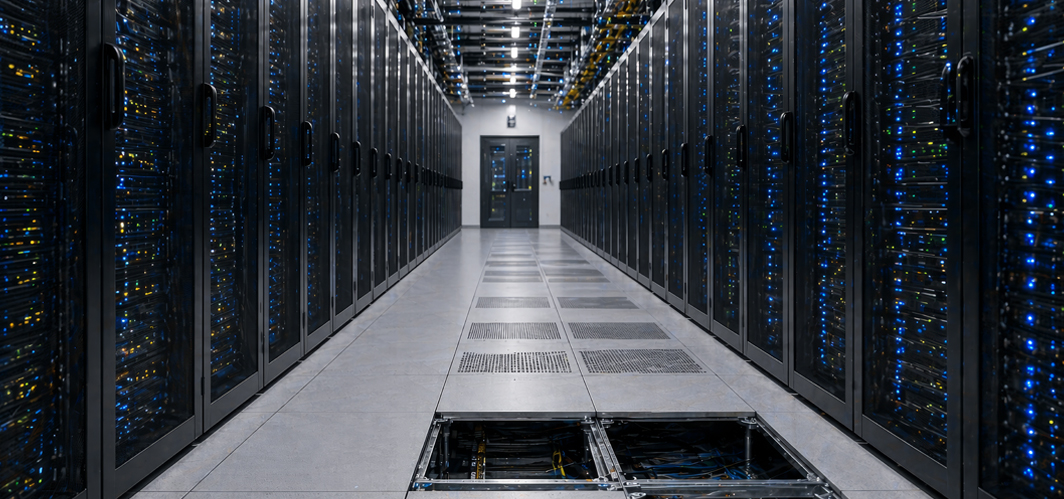
A common issue in data centre development arises when standard commercial structures are repurposed without fully accounting for server load requirements. Midway through design or construction, teams often discover that typical structural systems cannot support high-density rack configurations, leading to costly redesigns or reinforcement work.
This challenge highlights a broader reality. Structural decisions in data centre construction are not isolated to load capacity alone. Fire resistance requirements and electromagnetic interference considerations place additional constraints on material selection. These factors must be addressed together at the design stage, not retrofitted later, to ensure performance, compliance, and operational stability.
Drawing from 15 years of experience across UAE data centre projects, ASSENT STEELS has observed that early structural decisions directly influence long-term performance, particularly in high-load, high-specification environments.
What Materials Are Used in Data Centre Construction?
Data centre construction involves a combination of structural, envelope, and specialised materials selected to meet performance, durability, and operational requirements. The primary structural systems include hot-rolled structural steel, reinforced concrete, and hybrid steel-concrete frameworks, each suited to different load and span conditions.
Building envelopes typically use insulated metal panels, precast concrete, or composite cladding systems, where thermal control and vapour management are critical for maintaining internal stability. Internally, raised access floors are often steel-framed, with concrete on metal deck systems supporting equipment loads.
Specialist materials such as RF-shielded panels and fire-rated board systems are integrated where required. Within this broader mix of data centre building materials, structural steel consistently emerges as the preferred choice when load, fire, and electromagnetic constraints must be addressed together.
How Server Rack Density Translates to Structural Load Requirements
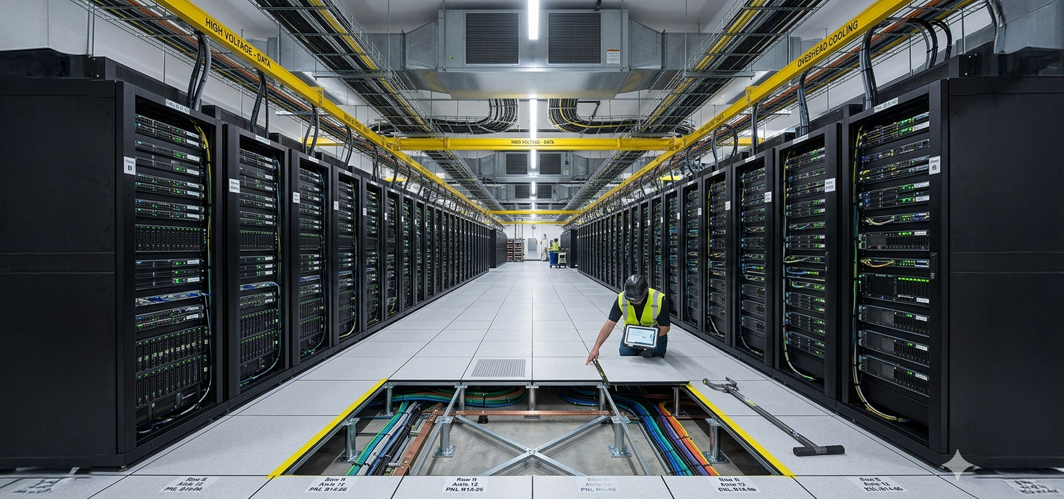
Server rack density directly defines floor load requirements in data centres. Unlike commercial office buildings designed for approximately 2.5 to 5 kN/m², colocation facilities typically operate in the range of 7 to 12 kN/m², while high-density AI and GPU deployments can reach 15 to 30 kN/m² or higher.
These loads include both distributed loads across raised floor systems and concentrated point loads from individual racks. Structural steel design for industrial buildings applies here, where beam sizes, spacing, and deck systems are calculated to control deflection and vibration within acceptable limits under sustained load conditions.
In practice, this requires precise coordination between engineering and fabrication. ASSENT STEELS develops and verifies structural steel sections based on project-specific load requirements, working either from client-provided specifications or through a design-and-build approach where structural systems are engineered and optimised in-house.
Underspecification can lead to excessive deflection or vibration, affecting equipment stability and long-term performance. For this reason, load engineering must be resolved at the design stage, based on realistic rack density assumptions rather than standard commercial benchmarks.
EMI Shielding: The Underspecified Advantage of Steel-Framed Enclosures
Electromagnetic interference is a critical consideration in facilities handling sensitive data or operating near high-frequency equipment. A continuous structural steel frame, when properly connected and grounded, can create a partial Faraday cage effect, reducing external electromagnetic interference.
This passive attenuation typically provides baseline shielding, but it has limits. It does not replace dedicated systems required for high-security or high-precision environments. In applications such as financial trading floors, defence infrastructure, or MRI-adjacent facilities, additional RF shielding using conductive mesh or specialised linings is required.
Performance depends on continuity across structural connections and proper grounding throughout the frame. In many standard data centre applications, structural steel contributes to electromagnetic stability, while more stringent environments require layered shielding strategies to meet compliance requirements.
Steel vs Concrete vs Hybrid: Choosing the Right Structure for Your Facility Tier
Selecting the right structural system depends on project requirements rather than a single material preference. Each system offers distinct advantages based on performance, timeline, and operational needs.
- Steel frame
Faster erection, longer spans, and easier future expansion. Well suited for modular builds and edge data centres where speed and flexibility are critical. - Concrete structure
Higher thermal mass and inherent fire resistance. Preferred in seismic zones or where vibration control and structural damping are key considerations. - Hybrid systems (steel + concrete deck)
Common in hyperscale facilities, combining speed of steel with stiffness and load distribution of concrete floor systems.
In the UAE, steel-framed and hybrid systems are widely adopted due to compressed construction timelines, the need for phased or modular expansion, and environmental conditions that demand controlled surface treatment for long-term durability. Protective coatings and fireproofing systems play a critical role in maintaining performance under high temperature and coastal exposure conditions.
ASSENT STEELS supports data centre structures through integrated capabilities across engineering, fabrication, blasting and painting, fireproofing, and steel erection, enabling a coordinated approach from design through to installation.
Why "Over-Engineering" The Steel Structure Is Rarely the Real Cost Problem
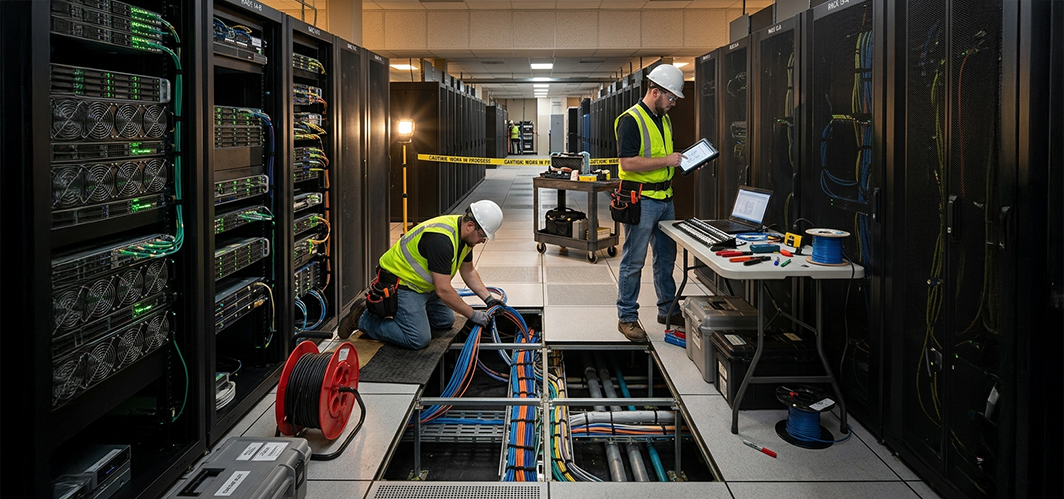
Early-stage decisions often focus on reducing structural steel quantities to control upfront costs. However, underspecifying the structure introduces far greater financial risk later in the project lifecycle. Retrofitting structural systems to handle higher loads, correcting deflection issues, or upgrading fire protection measures can require shutdowns, redesign, and reinstallation.
In operational data centres, even a single unplanned outage can result in significant financial impact, far exceeding the cost difference between standard and heavier structural sections. Insurance implications and compliance risks further increase exposure when structural performance is marginal.
Viewed in this context, investing in robust structural design at the outset is not over-engineering. It is a controlled approach to managing long-term operational and financial risk.
Designing for Performance, Not Correction
Structural decisions in data centre projects must be resolved early, as they are difficult to adjust once execution begins. Getting these fundamentals right supports smoother delivery and long-term operational stability.
ASSENT STEELS works with engineering and procurement teams to align structural steel systems with project-specific requirements from the outset. Explore our structural steel engineering services to understand how these requirements are addressed in practice.
