May 19, 2026
Table of Contents:
- Why is Steel Blasting Important Before Painting? The Surface Science Behind Coating Longevity
- Why Surface Preparation Determines Coating Performance
- What Exactly Does Steel Blasting Remove and Why Does Each Contaminant Matter?
- What is Surface Profile and How Does it Affect Paint Bond Strength?
- What are the different Blasting Standards and Which One Does Your Project Needs?
- How Long Does Blasted Steel Stay Clean Before it Must be Painted?
- What Coating Systems Depend on Blast Quality to Perform
- Industry Reality: Most Coating Failures are Pre-Determined at the Blast Stage
- Frequently Asked Questions
- The Foundation of Long-Term Coating Performance
Why is Steel Blasting Important Before Painting? The Surface Science Behind Coating Longevity
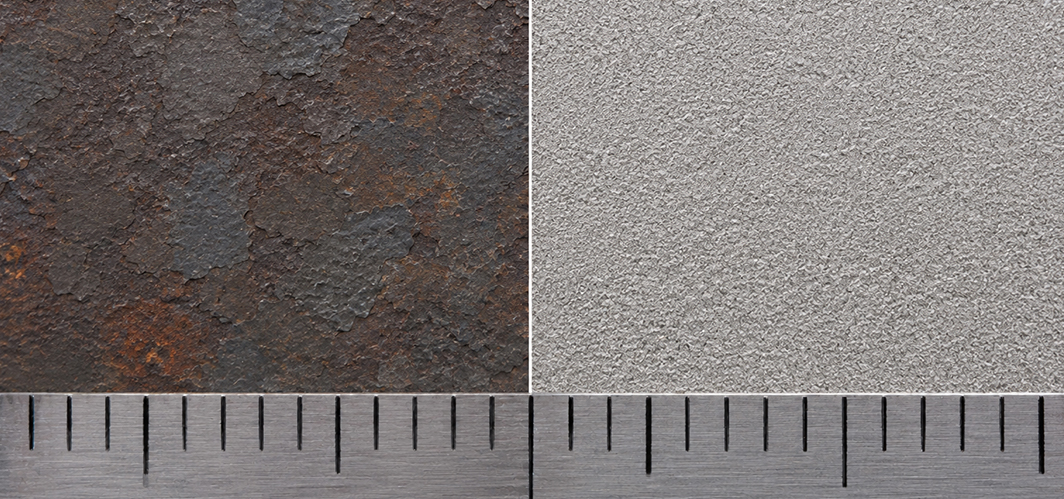
Steel blasting removes mill scale, rust, salts, and surface contaminants while creating an engineered anchor profile that coatings can mechanically bond to. Without proper blast cleaning, paint adhesion fails prematurely, leading to blistering, corrosion, and coating delamination. For structural steel, Sa 2.5 surface preparation is the standard foundation for long-term protective coating performance.
Why Surface Preparation Determines Coating Performance
A coating system can look flawless at project handover and still begin to blister or delaminate within the first 12 to 18 months. In many cases, the root cause is not the paint itself but the condition of the steel surface underneath.
Structural steel leaves the mill with mill scale, oxidation, and surface contamination that interfere with coating adhesion. In UAE industrial facilities, coastal developments, and infrastructure projects, inadequate surface preparation remains one of the most common causes of premature coating failure. Steel blasting is therefore not a procedural step to satisfy specifications. It is the technical foundation that determines whether a protective coating system performs as intended over the long term.
What Exactly Does Steel Blasting Remove and Why Does Each Contaminant Matter?
Abrasive blasting does more than clean the steel surface. It removes materials that interfere with coating adhesion and creates the conditions required for long-term corrosion protection. Each contaminant affects coating performance in a different way, which is why surface preparation standards are tightly defined.
| Surface Contaminant | How It Causes Coating Failure | Typical Treatment |
|---|---|---|
| Mill scale (Fe₃O₄) | Forms a brittle oxide layer that eventually detaches, causing coatings to lose adhesion and corrosion to spread underneath | Blast to Sa 2.5 minimum |
| Rust and iron oxide | Retains moisture beneath the coating film, promoting osmotic blistering and corrosion | Blast to Sa 2.5 or Sa 3 depending on exposure |
| Chloride contamination | Creates osmotic pressure under the coating, particularly in marine and coastal environments | Wash, test, and blast to Sa 2.5 |
| Oil and grease | Prevent primer adhesion and create localised coating defects | Solvent cleaning to SSPC-SP1 before blasting |
| Failed existing coatings | Introduce incompatible layers that cause intercoat adhesion failure | Remove to bare metal where coating integrity is uncertain |
For structural steels used in the UAE, where humidity, salt exposure, and industrial pollutants accelerate corrosion, removing these contaminants is essential to achieving the intended service life of protective coating systems.
What is Surface Profile and How Does it Affect Paint Bond Strength?
The anchor profile concept – why roughness is engineered, not incidental
Surface profile refers to the microscopic peaks and valleys created by abrasive blasting. This texture forms the anchor pattern that allows primers and coatings to bond mechanically to the steel surface. Most industrial coating systems specify a profile in the range of 40 to 100 microns (Rz), depending on the coating type and required service life.
If the profile is too shallow, the coating cannot develop sufficient adhesion and may peel prematurely. If it is too deep, the coating can thin over the peaks, creating weak points where corrosion begins. Surface roughness is therefore engineered to match the coating system, not treated as a by-product of blasting.
How abrasive selection changes the surface profile outcome
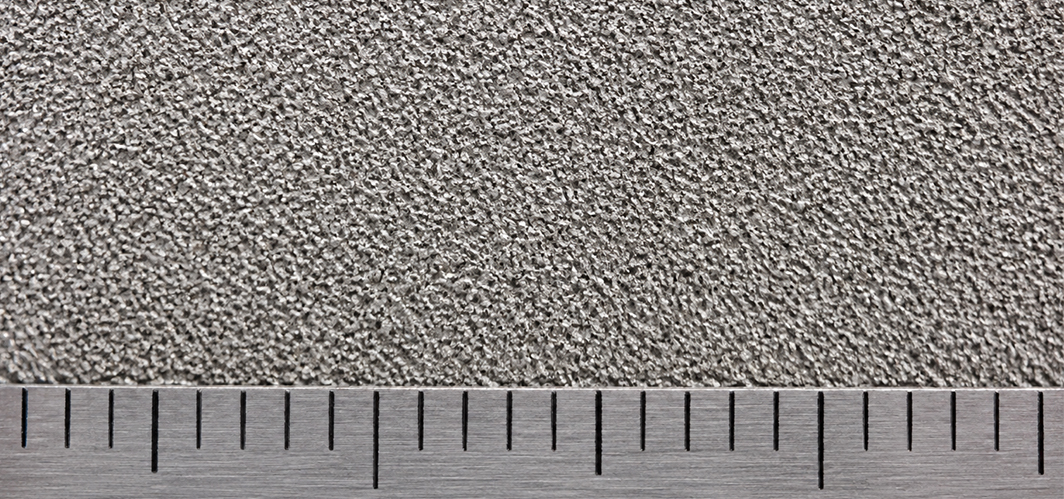
- Steel grit: Angular particles that create a deeper profile, commonly used for high-build epoxy and zinc-rich coating systems.
- Steel shot: Rounded media that produces a smoother profile where lower roughness is specified.
- Garnet: Non-ferrous abrasive preferred for marine and chloride-sensitive environments.
- Copper slag or crushed glass: Cost-effective media used on less critical structural applications.
The abrasive selected should match the coating manufacturer’s recommendations and the intended service environment. Choosing media based solely on cost can produce a profile that falls outside specification and compromises coating performance.
What are the different Blasting Standards and Which One Does Your Project Needs?
| Standard | Description | Typical Application in UAE Projects |
|---|---|---|
| Sa 1 (Light Blast Cleaning) | Removes loose rust and scale only | Temporary protection and non-critical steelwork |
| Sa 2 (Thorough Blast Cleaning) | Removes visible contamination and loosely adhering oxides | Secondary structures in low-corrosion environments |
| Sa 2.5 (Near-White Blast Cleaning) | Allows only slight staining with a uniform anchor profile | Most commercial, industrial, and infrastructure steel |
| Sa 3 (White Metal Blast Cleaning) | Produces a completely clean metallic surface | Offshore, immersion service, and aggressive exposure zones |
| SSPC-SP6 | Commercial blast cleaning broadly equivalent to Sa 2 | Maintenance work and less demanding applications |
For the majority of structural steel used in UAE airports, data centres, industrial plants, and commercial developments, Sa 2.5 is the standard specification. It provides the level of cleanliness and surface profile required for modern protective coating systems. When lower preparation standards are proposed for long-life structures, the impact on coating durability and warranty exposure should be assessed carefully.
How Long Does Blasted Steel Stay Clean Before it Must be Painted?
Freshly blasted steel begins to oxidise almost immediately when exposed to moisture and airborne contaminants. This rapid re-oxidation, known as flash rust, can compromise coating adhesion if primer is not applied within the allowable time window.
In the UAE’s coastal environment, where humidity and salt levels are often elevated, blasted steel may need to be primed within 2 to 4 hours on humid days. Under more controlled indoor conditions, this window may extend to 8 hours, provided dew point and surface cleanliness remain within specification.
Factors that accelerate flash rust include:
- Relative humidity above 85 percent
- Steel temperature approaching the dew point
- Residual salt contamination on the substrate
- Direct sun exposure causing rapid temperature changes
- Delays in primer application due to scheduling or equipment issues
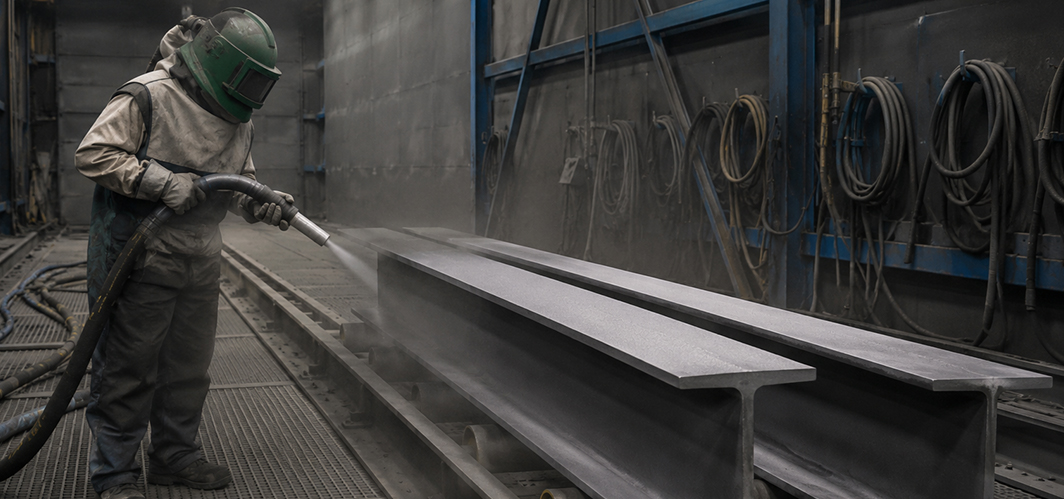
his is why covered, climate-controlled blasting and painting facilities are operationally critical. By controlling environmental conditions and coordinating blasting with immediate primer application, facilities such as ASSENT STEELS’ dedicated coating complex help preserve surface quality until the protective system is applied.
What Coating Systems Depend on Blast Quality to Perform
The performance of most industrial coating systems depends directly on the cleanliness and anchor profile achieved during blasting. Even high-specification coatings cannot compensate for inadequate surface preparation.
- Zinc-rich primers: Require direct contact with clean steel to provide galvanic protection. Residual mill scale or contamination interrupts this mechanism and reduces corrosion resistance.
- High-build epoxy coatings: Depend on a controlled anchor profile, typically 40 to 75 microns, to achieve full adhesion and long-term barrier performance.
- Polyurethane topcoats: Deliver UV and chemical resistance, but only when applied over a properly bonded primer system.
- Intumescent fireproofing systems: Require verified adhesion and Dry Film Thickness values. Failures at the blast stage can affect both coating durability and fire protection compliance.
For this reason, protective coating systems steel specifications should always be evaluated together with blast preparation requirements rather than as separate activities.
Industry Reality: Most Coating Failures are Pre-Determined at the Blast Stage
Coating performance is largely decided before the first litre of paint is applied. Industry studies and inspection data consistently show that 70 to 80 percent of coating failures are linked to inadequate surface preparation rather than defects in the coating product itself.
Specifying premium primers and topcoats while accepting substandard blasting is a false economy. The coating may appear compliant at handover, but premature blistering, under film corrosion, and adhesion loss often emerge well before the expected service life. In the UAE’s coastal and industrial environments, where corrosion rates are high, deficiencies at the blast stage become even more costly to correct after installation.
The Foundation of Long-Term Coating Performance
Steel blasting is not an optional preparatory step. It is the technical foundation that determines whether a protective coating system performs for its intended service life. When surface cleanliness and profile are achieved correctly, coating systems can deliver 15 to 25 years of protection even in aggressive environments.
ASSENT STEELS provides integrated blasting, painting, and fireproofing services for structural steel projects across the UAE and GCC. Explore our steel blasting and painting capabilities or request a coating specification review to evaluate the right solution for your project.
Frequently Asked Questions
1. Why is blasting required before painting steel?

Blasting removes mill scale, rust, salts, and other contaminants that prevent coatings from bonding to the steel surface. It also creates the anchor profile needed for mechanical adhesion. Without blasting, even high-performance coating systems can fail prematurely in industrial or coastal environments.
2. What is Sa 2.5 surface preparation?
3. How quickly does steel flash rust after blasting?
4. Can steel be painted without blasting?
5. What abrasive is best for blasting structural steel?
More Blogs